Key Points:
- ABA therapy for daily living skills breaks complex tasks like dressing and feeding into small, teachable steps that autistic children can learn at their own pace.
- Daily routine skills with ABA therapy in Durham are taught in real home environments, making it easier for children to actually use those skills every day.
- Functional skills in ABA therapy for autism in NC give children greater independence, reducing caregiver stress and building confidence for both child and family.
Getting dressed. Brushing teeth. Eating a meal with a fork. These are things many of us do without thinking. For autistic children, these tasks can be genuinely hard. Not because they are not capable, but because each step requires coordination, sequencing, and sometimes sensory tolerance that needs to be built carefully.
ABA therapy for daily living skills addresses exactly this. It takes tasks your child needs to do every single day and teaches them in a way that sticks. This guide explains how it works, what to expect, and how daily routine skills with ABA therapy in Durham can transform your family’s mornings, mealtimes, and bedtimes.
Why Daily Living Skills Matter So Much
Independence in daily life is not just convenient. It is a foundation for confidence, school readiness, and long-term well-being. Children who can manage their own self-care routines feel more capable. They are also better prepared for transitions like starting school, attending a summer program, or eventually living more independently as they grow.
For parents and caregivers, autism self-care skills through ABA also mean relief. When your child can put on their shoes, wash their hands, or eat breakfast with minimal prompting, your mornings become less exhausting. That matters a lot when you are managing everything else that comes with raising an autistic child.
Research shows that autistic children who receive targeted instruction in daily living skills show meaningful gains that generalize to real-life situations. This is especially true when therapy happens in the home environment. Learn more about how in-home ABA therapy works and why it is particularly effective for this type of skill-building.
What ABA Therapy for Dressing and Feeding Routines Looks Like
The approach used in ABA therapy for dressing and feeding routines is called task analysis. It means breaking down a skill into every single step, then teaching each step one at a time. Here is what that looks like in practice:
Teaching Dressing
Getting dressed involves many steps: choosing clothes, orienting garments correctly, managing buttons, zippers, or Velcro, and putting each item on in the right order. A child who struggles with dressing is not being defiant. They may be overwhelmed by the number of steps, or a zipper may feel sensory-challenging.
An ABA approach to dressing might include:
- Breaking the routine into 8 to 15 individual steps
- Starting with the last step first (backward chaining), so the child experiences success immediately
- Using visual supports like picture cards showing each step in order
- Providing the right level of physical guidance, then fading that help as skill builds
- Reinforcing each completed step with specific praise or a preferred reward
Teaching Feeding and Mealtime Skills
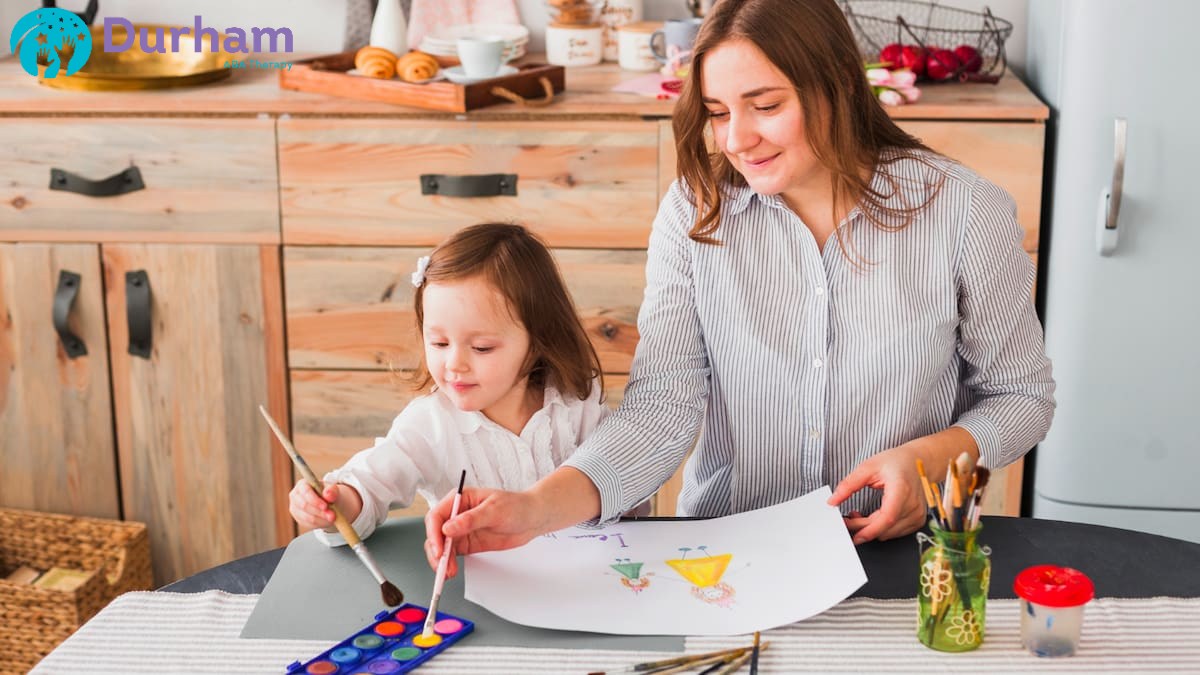 Mealtime can be one of the most stressful parts of the day for families of autistic children. Food sensitivities, utensil use, staying at the table, and managing transitions all come into play. ABA therapy for dressing and feeding routines addresses mealtime the same way: step by step, with clear reinforcement.
Common mealtime goals in ABA include:
- Using a fork or spoon consistently
- Tolerating a wider variety of foods without distress
- Staying seated for a target number of minutes
- Asking for more or signaling when done
- Managing transitions from mealtime to the next activity
If mealtime also involves sensory processing challenges, your BCBA and therapy team can build in specific strategies to address those alongside the feeding goals.
Life Skills Through ABA Therapy in North Carolina: Beyond the Basics
Daily living skills go beyond dressing and eating. Life skills through ABA therapy in North Carolina cover a wide range of abilities that help your child navigate everyday life with greater ease.
Some of the most common areas targeted include:
- Hygiene: Toothbrushing, handwashing, bathing, and hair care
- Toileting: Toilet training and managing hygiene steps independently
- Household participation: Putting away toys, setting the table, or sorting laundry
- Safety skills: Crossing the street safely, responding to their name, and following emergency instructions
- Community skills: Waiting in line, using a shopping cart, and managing public spaces
As your child gets older, these goals naturally shift. You can read more about how ABA goals change as children grow into teenagers to understand how the program evolves.
How Functional Skills in ABA Therapy for Autism in NC Are Taught at Home
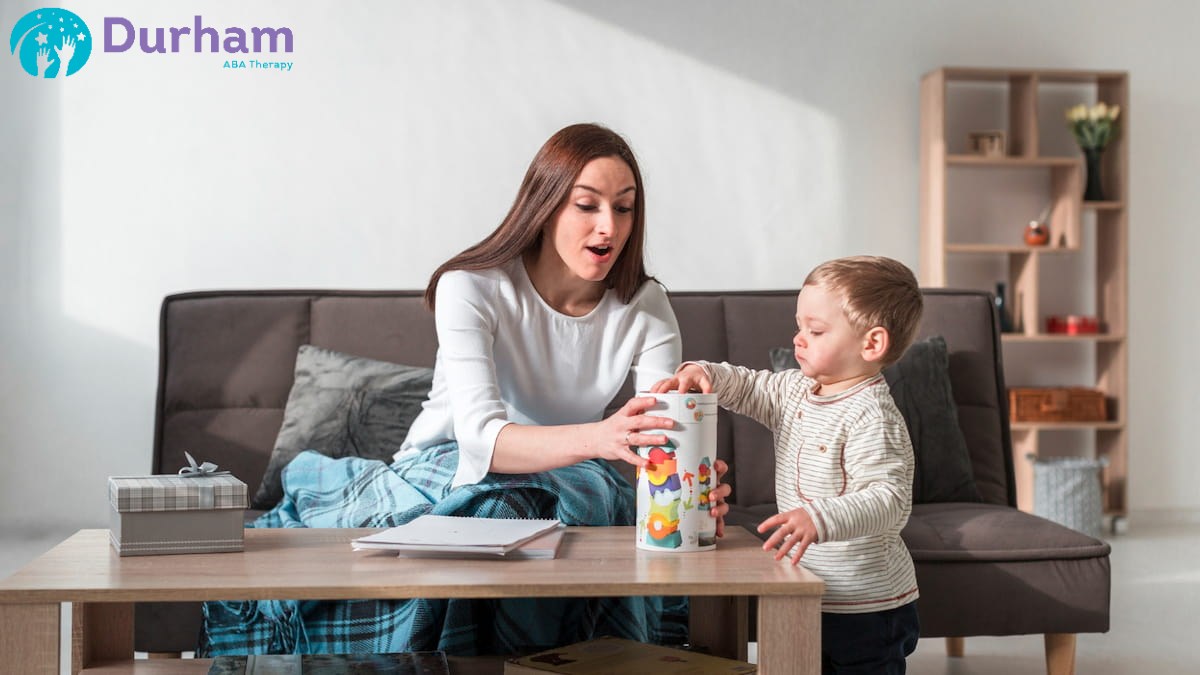
The best place to learn daily living skills is where your child actually uses them. That is why functional skills in ABA therapy for autism in NC are often delivered through in-home ABA services. The therapist works with your child during real routines, in your actual bathroom, kitchen, or bedroom.
This makes generalization much easier. Generalization means the skill transfers from the practice situation to real life. A child who learns to brush their teeth during a therapy session at the bathroom sink at home is far more likely to do it independently than one who learned it at a clinic.
Parents play a crucial role, too. Your BCBA will coach you on how to use the same prompting and reinforcement strategies between sessions. This consistency is what makes skills stick. Explore how therapist and parent collaboration builds a stronger ABA team for your child.
Autism Self-Care Skills Through ABA: What Progress Really Looks Like
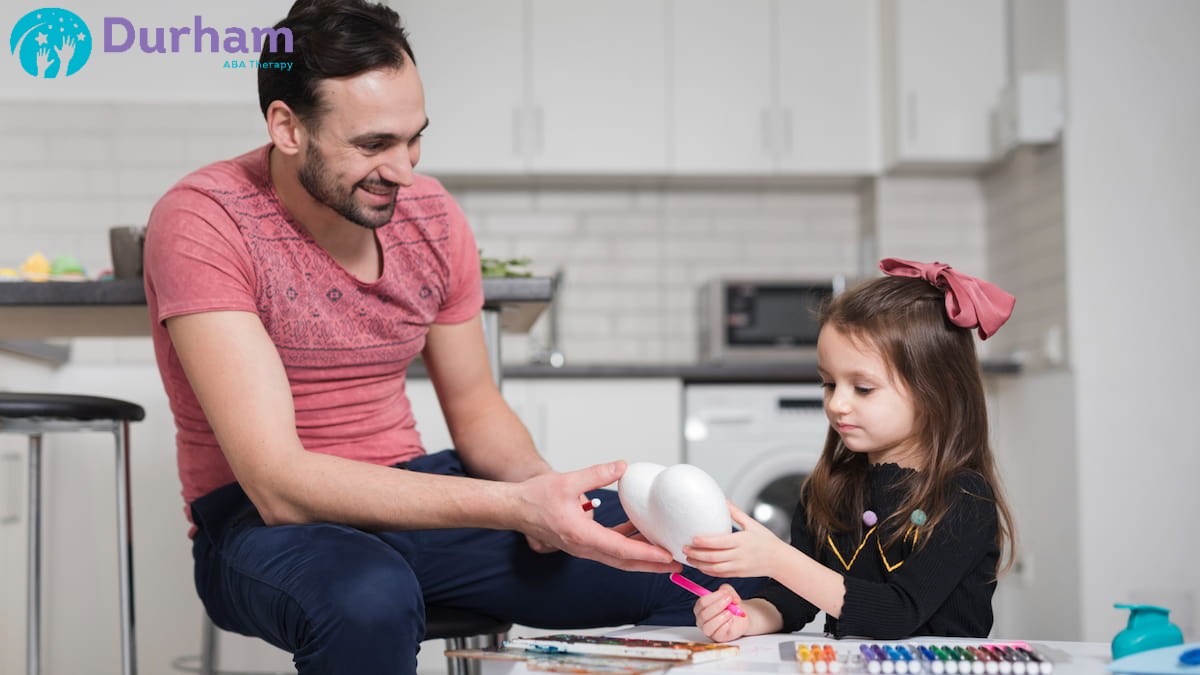 Progress in self-care skills is rarely linear. Some skills build quickly. Others take weeks or months of consistent practice. The data your child’s BCBA collects during each session tracks exactly where your child is on every goal, so adjustments can be made as needed.
What you might notice at home is gradual. Maybe your child starts putting on their shoes with only one reminder instead of five. Maybe they stay at the table two minutes longer each week. These small wins are the real story of autism self-care skills through ABA. They add up to meaningful independence over time.
For families in Durham, Cary, and surrounding areas, a complete guide to Durham County ABA services can help you understand all the support options available locally.
Frequently Asked Questions
At what age should daily living skills be a focus in ABA?
These skills can be targeted at any age. Many children begin working on self-care goals as early as 2 to 3 years old. Earlier instruction generally leads to greater independence by school age.
What if my child has sensory issues that make dressing or eating difficult?
Sensory challenges are addressed within the ABA plan. A BCBA may collaborate with an occupational therapist to tackle sensory-related barriers alongside behavioral strategies for self-care skills.
How long does it take to learn a skill like dressing independently?
It varies widely based on the child and the complexity of the skill. Some children master basic steps in weeks. Others may take several months of consistent practice. Progress is tracked closely throughout.
Can ABA therapy help with toilet training for older children?
Yes. ABA-based toilet training protocols are effective for children of many ages and ability levels. These programs are highly individualized and can be run at home or in a center-based setting.
Do parents need to be home during in-home ABA sessions?
Yes, and ideally, you are involved. Your active participation during and between sessions is one of the biggest factors in how quickly your child builds daily living skills through ABA.
Every Routine Is a Chance to Build Real Independence
Morning routines. Mealtimes. Bedtime. These happen every single day. With the right ABA support, they become opportunities for your child to grow in confidence and capability. Small steps practiced consistently create lasting change.
Durham ABA Therapy works with families across the Triangle to target the daily living skills that matter most in your child’s real life. Therapy is built around your home, your schedule, and your child’s specific needs.
Get in touch with us to learn how ABA therapy for daily living skills can help your child build independence at home in Durham, Raleigh, or Chapel Hill, NC.