
Key points:
- Durham County offers a growing network of ABA providers, local BCBAs, and North Carolina state programs designed to support autistic children and their families.
- Understanding how to access Durham autism therapy, verify provider credentials, and coordinate with schools helps families build consistent, effective support systems.
- Insurance coverage, Medicaid options, and local resources can reduce financial barriers, making quality ABA care more reachable for Durham families.
Families beginning the autism support journey often face a maze of options. Programs vary, providers differ, and understanding how Durham County ABA services work can feel overwhelming at first. Parents want guidance they can trust, not complicated explanations that leave more questions than answers.
Durham families benefit from a growing network of Durham autism therapy programs designed around practical, everyday progress. A qualified local BCBA evaluates a child’s strengths, communication patterns, and learning style before building a plan that supports development at home, school, and in community settings.
Across North Carolina, services continue expanding, making personalized therapy more accessible for families. Learning how local programs operate, who delivers care, and how progress is measured helps parents move forward with clarity rather than uncertainty.
What ABA Therapy Actually Involves
ABA therapy is a structured, evidence-based approach to supporting autistic children in developing communication, social, adaptive, and behavioral skills. According to the Centers for Disease Control and Prevention, ABA is one of the most researched interventions for autism spectrum disorder. At its core, it uses principles of learning science to break skills into smaller steps, reinforce progress, and reduce behaviors that interfere with daily life.
In Durham County, ABA services are typically delivered in the home, in a clinic, or in a school setting, depending on your child’s needs and your family’s circumstances.
Sessions are led by registered behavior technicians (RBTs) who work under the supervision of a Board Certified Behavior Analyst. The BCBA designs your child’s treatment plan, conducts regular assessments, and adjusts programming based on data collected during every session.
Families should understand that ABA is not a one-size-fits-all approach. A quality program prioritizes your child’s individual goals, incorporates caregiver training so you can reinforce skills at home, and respects your child’s dignity throughout the process.
Finding a Qualified Local BCBA in Durham
When looking for a local BCBA in Durham, credential verification is your most important first step. The Behavior Analyst Certification Board (BACB) maintains a public directory at bacb.com where you can confirm that any analyst you are considering holds a current, valid certification. A BCBA must have completed graduate-level coursework, supervised field experience, and passed a national exam.
Beyond credentials, it is worth asking prospective providers about their experience with your child’s specific age group and presenting needs.
Autism presents very differently across individuals, and a BCBA with deep experience supporting nonspeaking children may have a different skill set than one who primarily works with teenagers navigating social environments.
Ask how they communicate with families, how often they update treatment plans, and what caregiver training looks like within their model.
Durham benefits from proximity to major research and training institutions in the Triangle area, which means the local talent pool for North Carolina services in ABA is relatively strong. That said, waitlists exist, and families may need to plan, particularly for clinic-based or intensive home programs.
Types of ABA Programs Available in Durham County

Durham families generally have access to three main program formats:
Home-based ABA
Therapists come to your home, working with your child in their natural environment. This format is especially valuable for toddlers and young children and makes caregiver involvement more practical.
Center-based ABA
Your child attends a dedicated therapy clinic. This format tends to offer more structured programming and peer interaction opportunities, and may be appropriate for older children or those working on social skills.
School-based support
Some ABA providers coordinate directly with Durham Public Schools, supporting children during the school day and helping teachers implement behavior strategies in the classroom.
Many families in Durham use a combination of settings, especially as a child’s needs evolve. A good BCBA will help you determine which format, or blend of formats, best suits your child’s current goals.
Insurance, Medicaid, and Coverage for Durham Families
North Carolina law requires most private health insurance plans to cover ABA therapy for autism, following legislation that aligns with national parity standards. This means that if your child has a documented autism diagnosis, your insurance company generally cannot deny ABA as medically unnecessary without a valid clinical reason.
For families who rely on Medicaid, North Carolina’s Medicaid program covers ABA therapy for children under 21 when it is deemed medically necessary. The process typically involves a formal diagnosis, a BCBA assessment, and an authorization request submitted to the managed care organization overseeing your child’s plan. It is worth calling your plan directly to confirm the process, as timelines and required documentation vary.
If you are uninsured or underinsured, the North Carolina services landscape also includes the Innovations Waiver, which is covered in more depth in a separate resource on this site. Families in Durham can also contact the Autism Society of North Carolina for guidance on navigating funding options.
Coordinating Durham Autism Therapy with School Services
One of the most common challenges Durham families face is making sure that what happens in ABA therapy lines up with what happens at school. These two systems can feel like separate worlds, but meaningful communication between them directly benefits your child.
If your child has an Individualized Education Program (IEP), you have the right to invite your child’s BCBA to IEP meetings. Many behavior analysts will attend when asked, providing input on behavioral goals, environmental modifications, and strategies that teachers can use throughout the day. Bringing these perspectives together reduces the chance that your child receives conflicting instructions or mismatched expectations across settings.
Durham Public Schools has a Special Education department that can help families understand how school-based supports work in conjunction with private therapy. Keeping your ABA provider informed about school changes, new teachers, or social challenges can also help them adjust programming quickly and effectively.
What to Expect When You Start Services
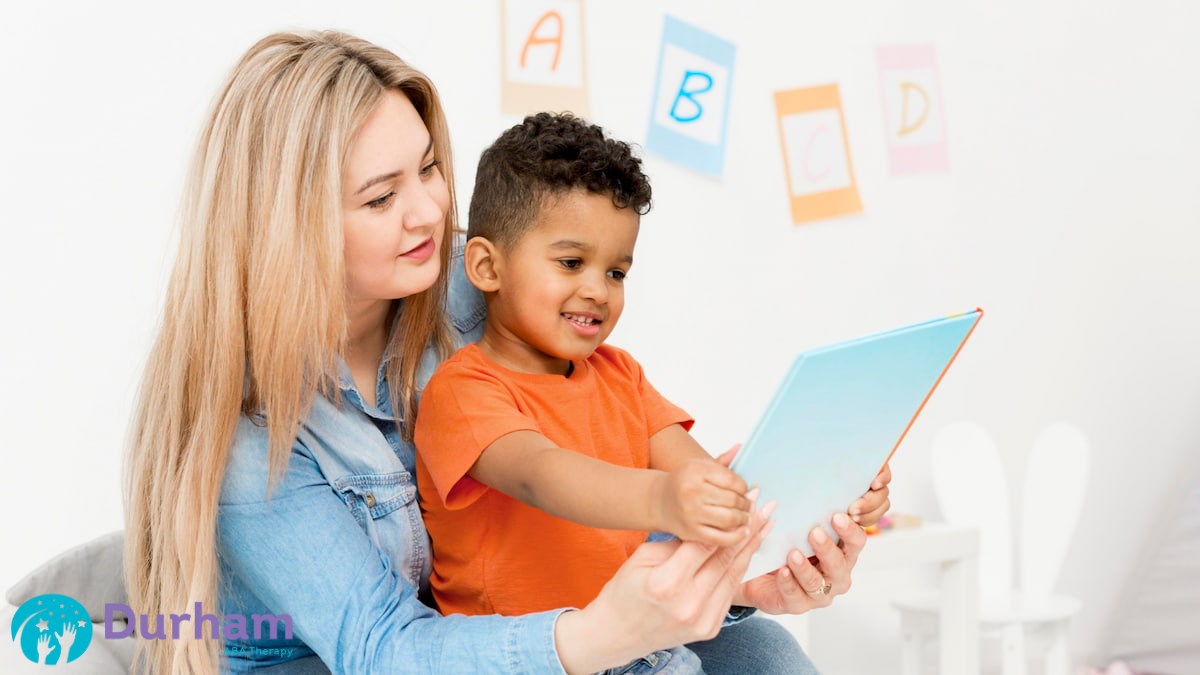
Starting Durham autism therapy involves several steps before your child has their first session. Most providers begin with an intake process that includes reviewing your child’s diagnosis documentation, completing a caregiver interview, and conducting a skills assessment. The BCBA uses this information to write an initial treatment plan that outlines specific, measurable goals.
From there, you will be matched with an RBT who will be your child’s primary therapist for regular sessions. You should expect the BCBA to supervise those sessions periodically and to meet with you regularly to review progress data and discuss goal updates. A quality program treats you as an active partner, not just a bystander.
If something does not feel right, whether it is the communication style, the pace of sessions, or a specific strategy being used, bring it up with the supervising BCBA directly. Parent concerns are clinically relevant information, and a good provider will take them seriously.
Frequently Asked Questions
How do I find a BCBA who accepts our insurance in Durham?
Contact your insurance company’s behavioral health line and request a list of in-network ABA providers in Durham County. You can also ask providers directly whether they accept your plan.
How many hours of ABA therapy does my child need?
Hour recommendations vary by age, diagnosis, and goals. A BCBA assessment determines an appropriate recommendation, typically ranging from 10 to 40 hours per week based on individual needs.
Can ABA therapy happen during the school day in Durham?
Yes. Some Durham providers offer school-based ABA support, and families can request this through the IEP process or by coordinating between private providers and the school directly.
What if we are on a waitlist? Are there things we can do in the meantime?
Yes. Caregiver training workshops, speech therapy, and parent support groups through the Autism Society of NC can all provide meaningful support while you wait for ABA services to begin.
Is ABA therapy right for every autistic child?
ABA is well-supported by research, but individual fit matters. A thorough assessment by a qualified local BCBA helps determine whether ABA is appropriate and what format would work best for your child.
Start Your Child’s Path with Local Guidance That Understands Durham
Finding the right support should feel reassuring from the first conversation. When families work with professionals who understand Durham County, therapy plans reflect real daily environments rather than generic recommendations.
Durham ABA Therapy connects families with experienced clinicians, including a dedicated local BCBA team guiding each step of care. Services include in-home sessions, collaboration with schools, and family coaching designed to strengthen skills across everyday routines. This approach reflects the broader network of North Carolina services focused on measurable growth and meaningful independence.
Your child deserves therapy shaped around their strengths and your family’s goals. Reach out today to explore Durham autism therapy options that combine evidence-based strategies with compassionate local support.