
Key Points:
- Parent training for ABA therapy in North Carolina equips caregivers with the same strategies therapists use, creating consistency that accelerates skill development.
- ABA parent coaching in Durham, NC, is not about becoming your child’s therapist; it is about using everyday moments to reinforce what your child is already learning.
- The hours between therapy sessions are when real-life practice happens, and parent involvement in those hours is one of the strongest predictors of long-term progress.
Your child’s therapist is with them for a few hours each week. You are with them for the rest of it. That is not a small thing. In fact, it might be the most important thing when it comes to lasting progress in ABA therapy. Parent training for ABA therapy in North Carolina is designed to help you use that time well.
It is not about adding pressure or turning you into a second therapist. It is about giving you real tools that fit into your real life. This guide explains how ABA parent coaching in Durham, NC, works, what you will learn, and why your role between sessions matters more than most families realize.
Why the Parent Role in ABA Therapy Is So Powerful
Think about how many learning opportunities happen in a single day at home. Breakfast. Getting dressed. Transitioning from one activity to another. Handling a disappointment. Each of these is a chance to reinforce the skills your child is building in therapy.
The parents’ role in ABA therapy is not passive. Research consistently shows that children whose parents actively implement ABA strategies at home make faster progress and maintain skills longer. This makes sense: consistency across settings is one of the core principles of behavior science. A skill practiced only during therapy sessions is harder to generalize, meaning your child has more difficulty using it in real life.
You can learn more about why generalization matters in helping ABA skills carry over to real life. The gap between a skill learned in therapy and a skill used independently at home is closed primarily through what happens between sessions.
What ABA Parent Coaching in Durham, NC, Actually Covers
Good parent training is not a lecture. It is a collaborative, practical process where you learn by doing alongside your child’s therapy team. ABA parent coaching in Durham, NC typically covers:
Understanding Reinforcement
Reinforcement is the cornerstone of ABA. It means providing something your child values immediately after a desired behavior, which makes that behavior more likely to happen again. Reinforcement is not bribery. It is how all humans learn, and getting it right makes a significant difference.
In parent training, you will learn which reinforcers work best for your child, how to deliver them at the right moment, and how to gradually reduce them as your child becomes more independent. Use it every time the target behavior happens, especially when you are first building a new skill.
Prompting and Fading
A prompt is any form of support you give to help your child complete a step they cannot yet do independently. It might be physical guidance, a gesture, a visual, or a verbal reminder. Fading means gradually removing that support so your child builds independence. Knowing how and when to prompt, and when to step back, is one of the most valuable things parent training teaches.
Managing Challenging Behaviors
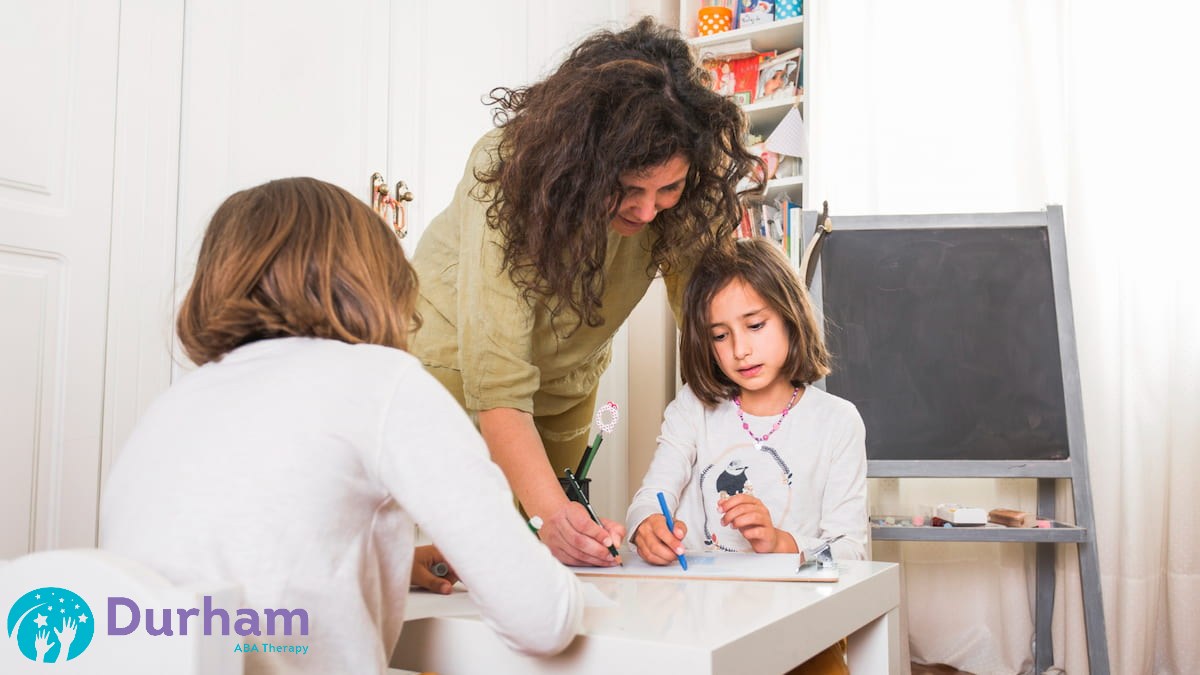 Parent training also covers how to respond when your child struggles. You will learn how to identify what function a behavior serves, meaning what your child is getting from it or trying to avoid, and how to respond in a way that does not accidentally reinforce the behavior. Addressing common behavior challenges in ABA is a big part of what parent coaching covers.
Building Routines That Support Learning
Predictable routines reduce anxiety and create natural practice opportunities. Your coaching sessions will help you design daily routines that embed skill practice naturally. Morning routines, mealtimes, and bedtime all become structured learning moments without feeling clinical.
How to Reinforce ABA Therapy at Home: Practical Strategies
You do not need to carve out special therapy time to support your child’s ABA goals. How to reinforce ABA therapy at home is really about weaving strategies into what you are already doing.
- Follow the therapy plan: Your child’s BCBA will give you specific targets to practice. Focus on one or two goals at a time to keep things manageable.
- Be consistent with language: Use the same words and prompts your child’s therapist uses. Consistency in language helps your child learn faster.
- Praise specifically: Instead of ‘good job,’ try ‘great job asking for the apple with your words.’ Specific praise helps your child understand exactly what they did right.
- Capture teachable moments: When your child initiates communication, follows a direction, or handles a transition well, reinforce it right away.
- Keep notes: Write down what you notice at home. What went well? What was hard? Share this with the therapy team. It directly informs how sessions are adjusted. Tracking progress in ABA is a team effort.
Supporting ABA Therapy Goals at Home in NC: What It Looks Like Day to Day
Let’s make this concrete. Here are examples of supporting ABA therapy goals at home in NC during everyday activities:
- Morning routine: If your child is working on independence in self-care, give them a visual schedule and step back rather than doing it for them. Prompt only when needed.
- Mealtime: If the goal is to use words or a communication device to request food, wait for the attempt before placing the item in front of them.
- Play time: If your child is working on turn-taking, build it into a preferred game rather than making it feel like practice.
- Community outings: If your child is learning to tolerate new environments, bring their preferred item, give advance notice, and keep the first visits short.
- Bedtime: Use a predictable sequence every night. Predictability regulates autistic children and supports the kind of emotional stability that helps learning happen.
For families navigating these strategies across a school setting as well, understanding how school-based and home-based ABA compare can help you coordinate goals across both environments.
ABA Parent Training in Raleigh and Beyond: What the Research Shows
The evidence for parent-implemented ABA is strong. Studies show that when parents are trained to use ABA strategies consistently, children’s outcomes improve significantly, especially in communication, social skills, and adaptive behavior. ABA parent training in Raleigh and across the Triangle is increasingly recognized as an essential part of the therapy model, not an optional add-on.
North Carolina’s Medicaid and many private insurance plans now cover parent training hours as part of an ABA authorization. Ask your provider about including parent training in your child’s plan. You can also explore whether ABA therapy is covered by Medicaid in NC for more information on funding options.
For those who are newer to ABA and want to understand the therapy itself more deeply before diving into parent training, the complete guide to what ABA therapy is is a great starting point.
Common Questions Parents Have About ABA Coaching
 Parent training can raise its own set of questions. Here are some things families often wonder about:
- Will I be judged for what I am doing wrong? No. Good parent trainers are collaborative, not critical. The goal is to build on what you are already doing well.
- What if I forget what to do between sessions? Your BCBA should give you written summaries or visual supports. If they do not, ask for them.
- What if my partner and I are inconsistent with each other? This is very common. Parent training should include all caregivers in the household. Bring your partner, grandparent, or whoever else is part of daily care.
- Do I have to do this every single day? Consistency matters more than volume. A few meaningful interactions each day, done consistently, beat an hour of intensive practice once a week.
Frequently Asked Questions
Is parent training included in every ABA program in NC?
Not automatically, but it should be. Parent training is considered a best practice in ABA and is covered by many insurance plans. Ask your provider explicitly whether it is part of your child’s program.
How many parent training sessions will I need?
This varies. Many families start with one session per week during the early months of therapy. As you become more confident, sessions may shift to monthly check-ins with ongoing support as needed.
Can parent training happen online through telehealth?
Yes. Many providers offer telehealth parent coaching, which can be more convenient for busy families. Your BCBA can observe sessions through video and provide real-time feedback on strategy implementation.
What if my child reacts differently when I try the strategies than when the therapist does?
This is normal, especially early on. Your BCBA can coach you through exactly this. Consistency over time, not perfection from day one, is what matters.
How do I know if parent training is actually helping?
Your child’s data will reflect it. If skills are generalizing to home and community settings, and if challenging behaviors are decreasing outside of therapy time, parent training is working.
You Are Already the Most Important Person on Your Child’s Team
The strategies your child learns in therapy are only as powerful as how consistently they are used at home. You do not need to be an expert. You need to be informed, consistent, and supported. That is exactly what parent training provides.
Durham ABA Therapy includes structured parent coaching as part of every family’s ABA program. You will leave each session with clear, practical guidance you can use the same day, because the hours between sessions are where lasting change happens.
Contact us to learn more about parent training for ABA therapy in North Carolina and how to get started with ABA parent coaching in Durham, NC.